
python测试开发django
- 作者: 五速梦信息网
- 时间: 2026年06月03日 13:35
前言
在开发一个网站时,经常会用到用户的注册和登陆相关的账号管理功能,auth模块是Django提供的标准权限管理系统,可以提供用户身份认证, 用户组和权限管理。
像用户注册、用户登录、用户认证、注销、修改密码等功能都不需要我们去开发,这些功能django已经早就设计好了。
python manage.py createsuperuser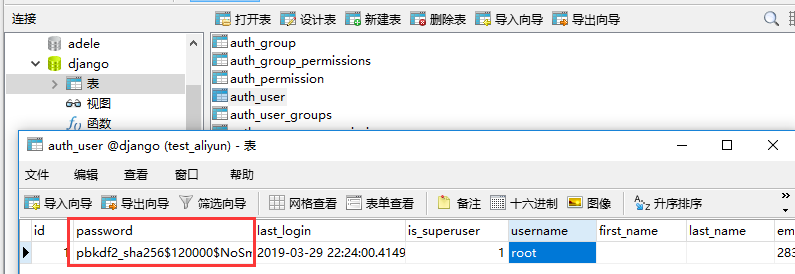
这里我的账号是root,密码是root,很显然存在数据库的密码不是明文的,而是加密后的
认证authenticate()authenticatefrom django.contrib.auth import authenticate
> python manage.py shell

>>> from django.contrib.auth.models import User

>>> from django.contrib.auth import authenticate

输入正确账号,密码,user返回root用户对象


>>> user=authenticate(username=‘root’,password=‘root’)

>>> user

<User: root>

输入错误的密码,user返回为空


>>> user=authenticate(username=‘root’,password=‘xxxx’)

>>> user

>>>
authenticate认证用户的密码是否有效, 若有效则返回代表该用户的user对象, 若无效则返回None
注册create_usercreate_user> python manage.py shell
>>> from django.contrib.auth.models import User
>>> from django.contrib.auth import authenticate
新增用户test.密码test
>>> user1=User.objects.create_user(username=‘test’,password=‘test’,email=‘283340479@qq.com’)
>>> user1.save()
>>>
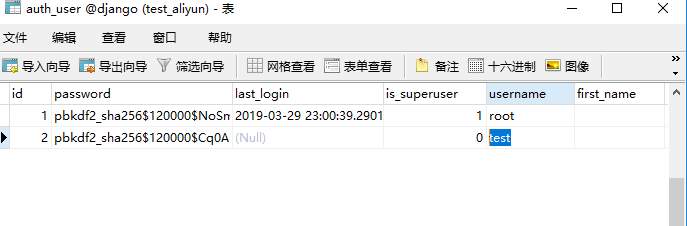
save保存后,数据库查看auth_user表新增成功
当我们需要修改密码的时候,可以用set_password方法,该方法不验证用户的身份,直接修改,一般在已经登陆的时候,修改密码使用
> python manage.py shell

>>> from django.contrib.auth.models import User

>>> from django.contrib.auth import authenticate

>>> user=authenticate(username=‘test’,password=‘test’)

设置新密码


>>> user.set_password(‘123456’)

>>> user.save()

修改成功后使用新密码登陆


>>> user=authenticate(username=‘test’,password=‘test’)

>>> user.set_password(‘123456’)
当密码错误的时候,user返回为空,使用user.set_password(‘123456’)会直接抛异常,所以修改密码的时候,一般先判断下
>>> user=authenticate(username=‘test’,password=‘test’)


密码不对,user为空抛异常


>>> user.set_password(‘123456’)

Traceback (most recent call last):

  File “<console>”, line 1, in <module>

AttributeError: ‘NoneType’ object has no attribute ‘set_password’

加判断


>>> user=authenticate(username=‘test’,password=‘test’)

>>> user

>>> if user is not None:

…         user.set_password(‘123456’)

…         user.save()

…

>>>
用户登陆功能,有给专门的login函数,它可以在session中添加SESSION_KEY
from django.contrib.auth import login
login(request, user)authenticate(username=username, password=password)login(request, user)
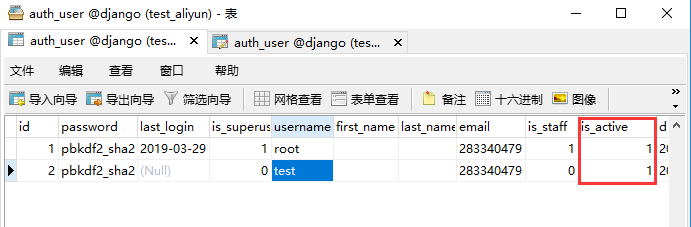
is_activefrom django.contrib.auth import login, authenticate
def login_view(request):
‘’‘session登陆'''<br/>
user = authenticate(username='test', password='test')<br/>
if user is not None:<br/>
if user.is_active:<br/>
login(request, user)<br/>
logout会清除request中的user信息, 并刷新session
from django.contrib.auth import logout
def logout_view(request):
'''退出登陆'''<br/>
logout(request)<br/>
- 上一篇: Python处理Excel表格
- 下一篇: python操作MySQL数据库并将数据写入excel
相关文章
-

Python处理Excel表格
Python处理Excel表格
- 互联网
- 2026年06月03日
-

python处理oracle数据库的返回数据
python处理oracle数据库的返回数据
- 互联网
- 2026年06月03日
-

python处理sqlserver数据库的返回数据
python处理sqlserver数据库的返回数据
- 互联网
- 2026年06月03日
-
python操作MySQL数据库并将数据写入excel
python操作MySQL数据库并将数据写入excel
- 互联网
- 2026年06月03日
-
Python操作MySQL数据库,插入重复数据
Python操作MySQL数据库,插入重复数据
- 互联网
- 2026年06月03日
-
python操作Excel
python操作Excel
- 互联网
- 2026年06月03日